Creepy to Be Continued Creepy to Be Continued
Human beings are strange creatures; we eat weird food combinations, don funny outfits, and sometimes even drink ourselves silly. Perhaps strangest of all is our love of being scared. From haunted houses to horror movie marathons, we find ourselves drawn to the things that make us jump. Even more so than plain horror, a fear of the unknown and a fascination with exploring it seems to be what captures our attention the most. What is creepy makes us curious and, over the years, we have found countless ways to satisfy our need to feel freaked out. Stop-motion animation is at the top of plenty of people's lists when it comes to their favorite form of horror, with the medium itself often described as creepy and off-putting (as well as 'beautiful,' of course).
But creepiness has a different feel than straight horror. While they are certainly similar, things that are considered creepy have an 'unknown' factor to them; they cannot be figured out in their entirety. The danger of what is scary is not exactly obvious, or maybe there's nothing even danger there, and yet, we are still afraid. Vagueness and ambiguity play a large part in what we, as humans, find creepy. The idea of the 'Uncanny Valley,' where technology creates things that are almost human but are just off enough to make us feel uncomfortable, fits into this space quite neatly.
For the same reasons that horror excites us, the idea of being creeped out, while still being physically safe, does too. Our blood pressure rises, our breathing increases, and the rush of adrenaline is welcomed. Back when we roamed the earth alongside prehistoric predators finding something unsettling or strange, and being afraid of it, kept us alive. We steered clear of ambiguity - is that shadow in the brush just a shadow... or is a predator? It doesn't matter because, as long as you get away, you'll be safe. Being wary of ambiguity in humans kept us alive as well. Certain diseases, such as rabies, may cause a person to act extremely different and even dangerous, while still looking human. Being able to tell that something's not quite right with Jim from the next cave over could be the difference between life and death. In the past, we were rewarded by surviving another day. In the present, we are rewarded with excitement and adrenaline. The high of being freaked out, especially when we're not completely sure why, is enough to keep us coming back for more.
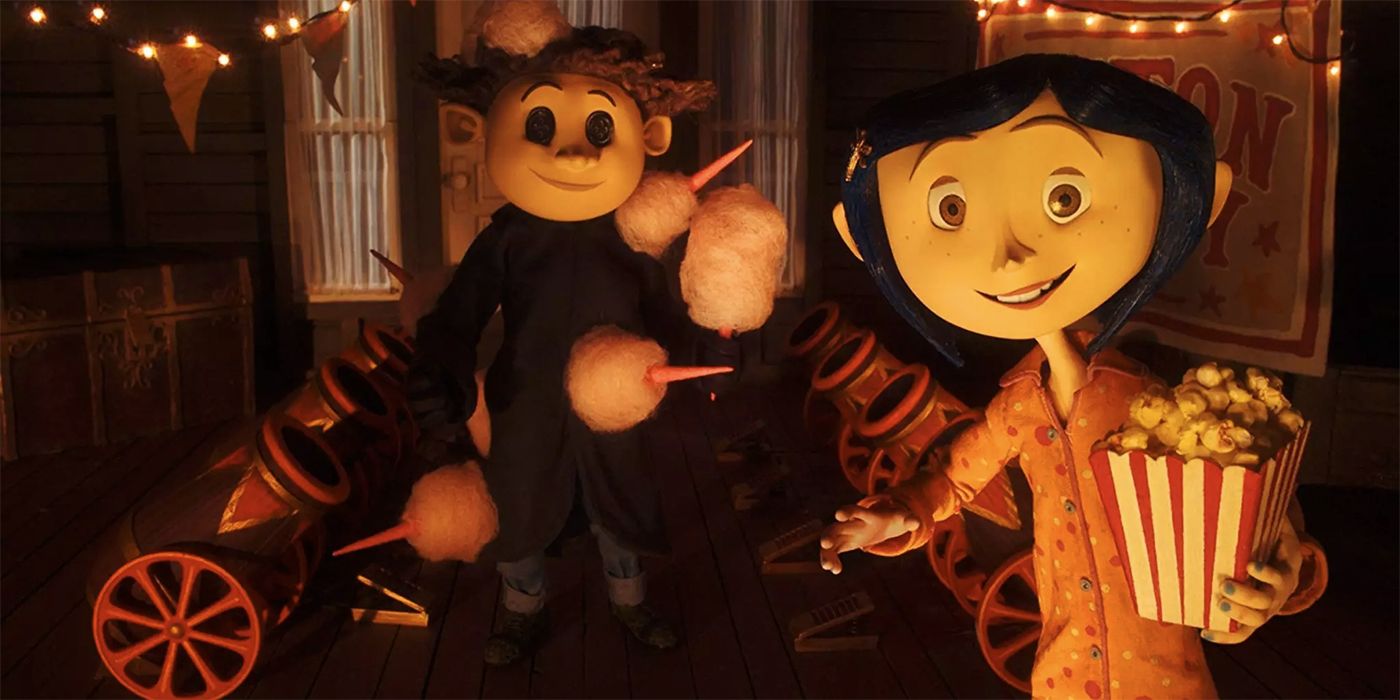
Curiosity is also rewarded when it comes to things that make us uncomfortable or scared. If being scared of the unknown helped us survive, learning about it has helped us thrive. Discovering new foods, medicinal cures, and even places to hide and stay safe all came about by studying the parts of our world that we previously didn't know about. In modern day, watching something new or exploring a medium or art style that we don't completely understand, is rewarding. It helps us to discover what we do and don't like, and where to look for more.
So then, why do we find stop-motion so creepy, and why do we love it so much? Maybe it is because stop-motion animation fulfills almost every aspect of what 'being creepy' means. While character designs obviously vary from project to project, there is a trend of uncanniness that seems to pervade all types of stop-motion. The way characters look and move teeters on the fine line between real and fictional; the jerky motion and exaggerated characteristics of the characters, such as strange proportions and expressions, give them a distinctly 'fake' feeling. They are unnatural and somewhat scary, but the fact that the characters are made from tangible things - that we know real people are moving them behind the scenes, even though we cannot see them - also makes them feel more real. It adds to that uncomfortable layer of being both a part of and distant from our world. Stop-motion is something be figured out; we, as an audience, love to understand how it is made and to see footage of animators and artists in action. It's a bit weird to see clay characters move on their own, conjuring images of haunted puppets and dolls, but to see a real human behind the work satisfies our curiosity and leaves room for appreciation.
Creepiness and, by extension, stop-motion animation appeals to our love of mystery and strangeness and films such as Coraline or Corpse Bride are great examples of using the medium of stop-motion to its full potential.
With Corpse Bride, the creepiness of the film is pretty straightforward, catering to morbid curiosity and the exploration of murder, death, and whatever comes after. The story itself is rather simple; a young man, engaged and soon to be married, accidentally ends up marrying a corpse instead - a talking, singing, heartbroken corpse, who mysteriously died before she could marry the love of her life. While the film is filled with fun songs and wacky shenanigans, there is no denying the dark cloud that sits over the entire story. With the majority of the characters being dead, the topic of the afterlife and what comes after death lurks behind every conversation and musical number.
The animators and artists go above and beyond when it comes to character designs and the animation itself, embracing the visceral nature of stop-motion animation to create visuals that are, at times, truly chilling to the bone. From skeletons that move and talk, to the desiccated and decomposing body of the title character herself, Corpse Bride delivers on the macabre. It indulges our desires to explore life after death in a way that feels friendly and accessible, without shying away from some rather gruesome imagery. We love it because death is scary and mysterious, but Corpse Bride is safe - it's a chance to confront death in a way that is still fun and entertaining. The characters push the boundaries of being human through shape and size, and sometimes crossing the line entirely to challenge how we perceive the dead.
Coraline, on the other hand, dazzles more gradually, building its creepy and disturbing story bit by bit.
The film follows Coraline (Dakota Fanning) as she finds a mysterious door in her new house that leads to another world, where she discovers lookalikes of her parents that are far kinder and more exciting to be around. Her 'new' parents are strange, doppelgängers of her real mother and father, but with black button eyes. They're not quite human, but it's difficult to discern what they truly are when they're first introduced. They're too perfect, too fun, and, even as the story advances, the mystery persists.
Coraline indulges in the fantasy of a different life, one that is better, with parents that play the best games and make the best food. It is unsettling in its presentation of the 'other' world, and it taps into that ancient desire to 'figure out what's wrong.' It leaves hints for the audience to gather, hidden in silly songs and beautiful backgrounds, and creates a path leading to a terrifying final reveal. The entirety of the film is unsettling, but never so much that it pushes us away; instead, the unknown factor of it all draws us further in, alongside the main character. The other-Mother isn't inherently scary at the start, but she's just strange enough to make us interested. To creep us out.
We like the mystery that Coraline presents us with, and we love the rush we get when we finally figure it out. However, this film wouldn't be as successful if it weren't stop-motion. It relies too much on 'feeling' - on the physicality between the puppets and the world around them to make the film feel real. To make the audience feel like they are really there. Coraline and the other characters of the film have weight to them; when Coraline crawls through the twisting tunnel to reach the other-Mother, it isn't a computer generated simulation. The puppet is really touching the pulsing walls of the corridor. When the other-Mother transforms into a thin spider-like monster, it's jarring because of how foreign it is and feels like body horror.
Another one of the best examples of wonderfully creepy stop-motion animation is The House , which is a compilation of three different stories, all taking place within the one titular house where everything is delightfully creepy. In The House, mystery and the Uncanny Valley take center stage. Puppets are crafted from strange materials, like felt and fur; only one out of the three stories features humans, but their tiny faces make expressions that are impossible to decern, they might as well be wearing masks. The second and third story take it even further, with rats, bugs, and cats used as the main characters and leaving the audience struggling to identify emotions through anything other than the dialogue spoken.
The use of stop-motion means that the house, the main setting of the entire film, feels surprisingly real. Without the characters standing inside, it is almost as if it is a real house that one could go and visit. As such, The House invokes a sense of tangibility that is much stronger than in the previous two films. It features objects and materials moving in ways they shouldn't be able to, and animals doing things that only humans can. It's unsettling, and plays with our ability to connect with the characters of each story, challenging the audience to find humanity when it's sometimes difficult to spot.
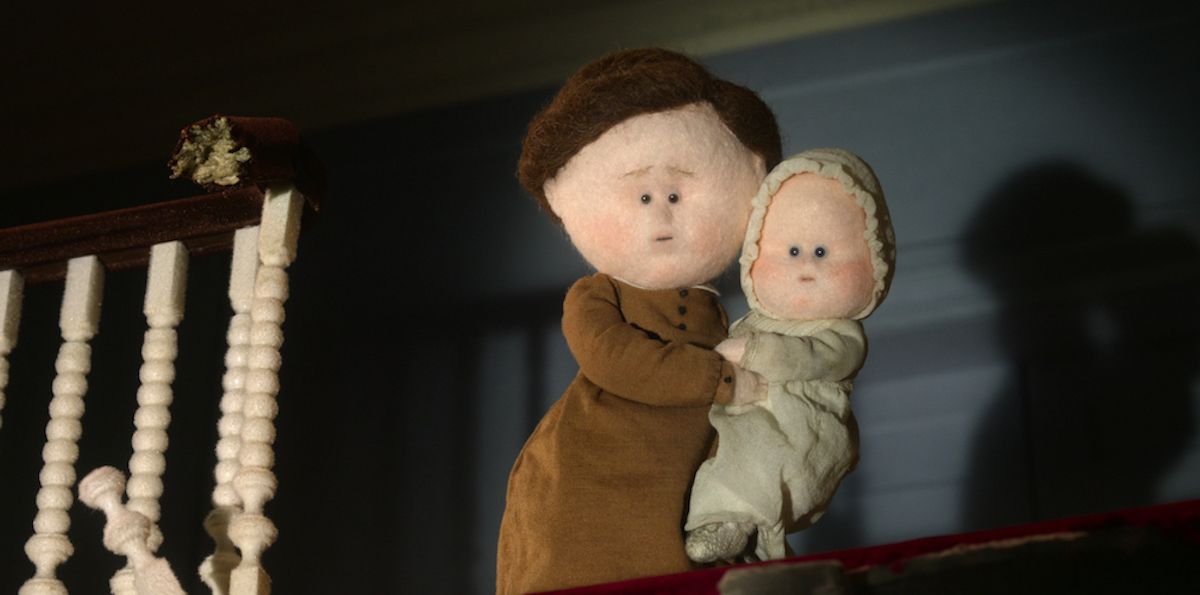
The stories within The House are also fairly vague; the audience is rarely given more than a handful of background details, and more often then not it feels as though we've been placed in the middle of an ongoing tale. With characters that are as vague as the story itself, the audience is left to piece together the various plots on their own. From a house that shifts and changes based on the whims of its terrifying architect, a house that slowly becomes infested with fur beetles and wriggling larvae, to a house that sits alone in a flooded wasteland, the three stories that make up this films are meant to be disturbing.
Stop-motion animation continues to delight us with creepy visuals and stories. The upcoming Pinocchio film by Guillermo Del Toro looks to be a promising addition to a long line of creepy, wonderful films, already leaning into the medium and embracing the world of weirdness. Like many of its predecessors, the preliminary artwork for the film exudes a mysterious charm, and the use of stop-motion brings to mind the strange and uncanny movements fans have come to love so much. As we continue to create and enjoy creepy stories through stop-motion animation, it's worthwhile to think about what exactly makes these wonderful pieces of media 'creepy' and why we, as an audience, can't get enough of them.
Source: https://collider.com/creepy-stop-motion-why-we-love-them-coraline-corpse-bride/

Post a Comment for "Creepy to Be Continued Creepy to Be Continued"